
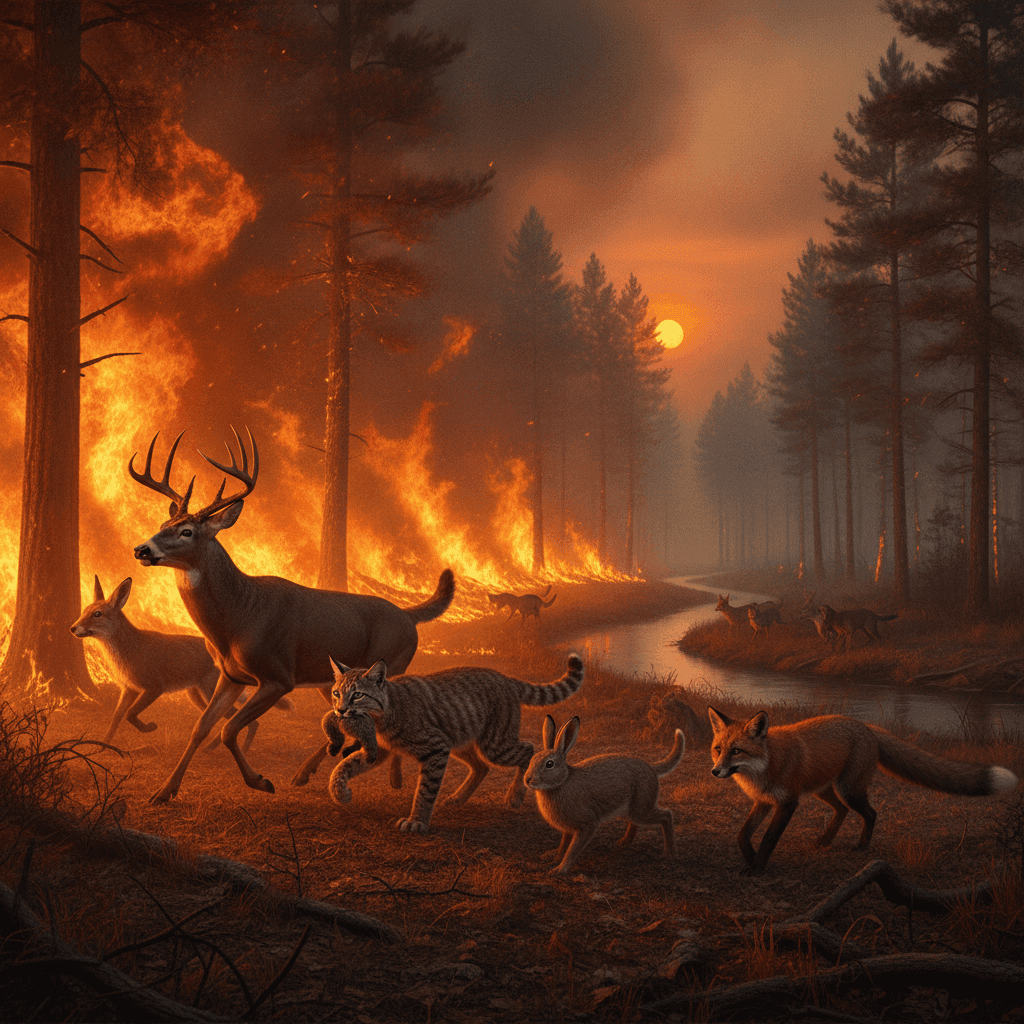
The sudden roar of a wildfire is a terrifying sound. For animals living in its path, those initial moments are incredibly chaotic and hold the key to their survival. We often hear about the vast destruction wildfires cause, but the urgency of the very first hour often gets overlooked. This critical window dictates much of an animal’s fate.
I have spent years observing how nature responds to sudden disasters. The speed at which a fire moves means animals have mere minutes, not hours, to make life or death decisions. Their instinctive responses are pushed to the limit as flames spread across the landscape.
Understanding why the first hour of a wildfire matters for animals helps us grasp the true scale of the impact. It also shines a light on how we can better protect wildlife in areas prone to these devastating events. Every second counts when fire enters their home.
The Immediate Threat: Smoke, Flames, and Panic
The first sixty minutes of a wildfire bring an overwhelming assault on an animal’s senses. Smoke fills the air first, thick and choking, reducing visibility to almost nothing. This smoke acts like an invisible wall, making it hard for animals to see, breathe, and navigate their familiar territory. It causes immediate confusion and fear.
As the flames arrive, the heat becomes unbearable. Animals that are slower or less mobile face direct incineration. Many small creatures, like insects, reptiles, and amphibians, have very little chance of escaping the fast-moving fire front. Their survival depends entirely on their ability to find immediate cover or burrow deep into the ground.
Panic sets in quickly for larger animals. Deer, bears, and other mammals often run blindly, disoriented by the smoke and the overwhelming noise. I have seen footage of animals running directly into fences or even human developments, simply desperate to escape the immediate threat. This initial panic can lead to injuries or trap them in perilous situations they would normally avoid.
Instinctive Reactions Under Duress
Different species react in unique ways during this first hour. Birds might fly away, but smoke often forces them lower, making flight dangerous. Some animals instinctively burrow underground, like badgers or ground squirrels, hoping the fire passes over them. Others, like deer, run as fast as they can.
This mix of immediate flight and hiding strategies highlights the diverse survival instincts at play. However, the sheer speed of modern wildfires sometimes overwhelms even these deeply ingrained behaviors. The suddenness of the event leaves little room for careful planning or coordinated group escapes.
Habitat Destruction: A Race Against Time
During that crucial first hour, an animal’s entire world can vanish. The lush forest or dense grassland they called home becomes a fiery inferno. This immediate destruction eliminates not just their shelter but also their access to food and water sources. These resources are critical for survival.
For many species, especially those with small territories or specialized diets, losing their habitat in the fire’s first pass means an immediate struggle for existence. I consider this one of the most devastating aspects of wildfires. There is no time to gather food or find a new water source. It is an instant deprivation.
Plants are burned, streams can dry up from the intense heat, and the very ground they stand on can become too hot to bear. This rapid change impacts herbivores who lose their food supply and carnivores who lose their prey. The entire local food web begins to unravel within minutes of the fire taking hold.
Loss of Shelter and Breeding Grounds
Nests, dens, and burrows are instantly destroyed. For animals in their breeding season, this means the loss of eggs or young that cannot move. Imagine a bird’s nest with hatchlings or a rabbit’s burrow with a litter. They have no chance against the fast-moving flames in that first hour.
This destruction of breeding grounds has ripple effects on population numbers for years. We lose not only the individuals caught in the fire but also the next generation of wildlife. This shows how crucial that initial impact is, shaping the future of species in the affected area.
Disorientation and Escape Routes
Wildfires create a chaotic environment that disorients animals in several ways. The thick smoke drastically reduces visibility, making it impossible to see familiar landmarks or safe pathways. Animals rely on their senses to navigate, and dense smoke makes this extremely difficult. I have observed how animals struggle in unfamiliar conditions.
The sounds of the fire itself, a deafening roar and crackle, drown out other natural cues. Animals cannot hear predators or the calls of their own kind, which are normally vital for collective movement or warnings. This sensory overload contributes to their confusion and hinders organized escapes.
Often, human developments block natural escape routes. Fences, roads, and buildings can become impassable barriers for panicked animals trying to flee. These obstacles, usually minor inconveniences, become deadly traps during the first hour of a wildfire. They prevent swift and direct escape.
Finding a Way Out
Animals that manage to escape the initial blaze still face immense challenges. They must find new territory that offers food, water, and shelter, often competing with other displaced animals. This competition can lead to further stress and mortality in the days and weeks following the fire.
The early stages of a wildfire are a true test of adaptability. If you wish to understand more about how animals cope with such immediate threats, you can explore this topic in greater depth. It is a period where every decision and every natural barrier holds huge significance.
Vulnerable Populations: Young, Old, and Slow
The first hour of a wildfire is especially merciless for the most vulnerable members of animal populations. Young animals, particularly infants and hatchlings, lack the physical capacity or developed instincts to escape quickly. They are often dependent on parents who may also be fleeing or trying to protect them.
Elderly or injured animals also face overwhelming odds. Their slower movements or impaired senses make them easy targets for the rapidly advancing flames. They cannot outrun the fire or find safe hiding spots with the same agility as healthy, adult animals. This creates a heartbreaking challenge for survival.
Species that are naturally slow or less mobile, such as tortoises, slugs, or some insects, are almost certainly doomed if they are directly in the fire’s path. Their survival hinges on sheer luck, like being in a rock crevice or a deep burrow that fire cannot reach. These animals have no defense against the speed of fire.
Immobile Life and Microhabitats
Beyond individual animals, countless immobile forms of life face instant destruction. This includes insect larvae, fungal networks, and dormant seeds in the topsoil. While some of these might survive deeper underground, many are lost in the surface heat during that first hour. This widespread loss impacts the future regeneration of the ecosystem.
I often think about the delicate balance of these microhabitats. They are easily overlooked but form the base of many food chains. Their destruction in the fire’s immediate impact zone sets back ecological recovery significantly, affecting everything else that relies on them.
The Domino Effect: Ecosystem Collapse Begins
When a wildfire rips through an area in its first hour, it does not just kill individual animals. It begins a rapid domino effect that can destabilize an entire ecosystem. The immediate loss of one species can quickly impact others in the food chain. This sets the stage for long-term ecological shifts.
Consider the decomposers, like certain insects and fungi, which are vital for breaking down organic matter. If they are decimated in the first fiery pass, the ecosystem loses a crucial cleanup crew. This can slow down nutrient cycling and make it harder for new plant life to take root after the fire.
The very structure of the forest or grassland is altered, which affects everything from soil temperature to water retention. The rapid heating and burning of vegetation during the fire’s initial phase can change soil composition, making it less hospitable for future growth. I have learned that the damage extends far beyond what we initially see.
Early Impacts on Biodiversity
Some species act as keystone species, meaning many other species depend on them. If these keystone species are hit hard in the first hour of a wildfire, the entire local biodiversity suffers. Their rapid decline can lead to a cascade of population drops among other organisms.
This immediate impact sets a new, often harsher, baseline for recovery. The fewer species that survive the initial assault, the harder it becomes for the ecosystem to bounce back. It truly highlights why early intervention and fire suppression are so vital.
Swift Human Response: A Lifeline for Wildlife
The first hour of a wildfire is also critical for human intervention, which can directly save countless animal lives. Early detection of a fire, whether by watchful citizens or advanced surveillance, allows firefighters to respond rapidly. This quick response is paramount to containing the fire before it escalates and engulfs vast areas.
When firefighters can tackle a blaze in its infancy, they limit the spread of flames and smoke. This gives animals a better chance to escape into unaffected zones. I believe our ability to act fast is one of the most powerful tools we have in wildlife protection during these emergencies.
For domestic animals and livestock, the first hour provides a narrow window for evacuation. If communities have well-practiced evacuation plans, pets and farm animals can be moved to safety before roads become impassable or smoke becomes too dense. This saves individual lives and reduces the overall suffering of animals.
Mapping Safe Zones and Corridors
Wildlife managers and conservationists often work to identify natural fire breaks and safe corridors in fire-prone areas. These strategic locations can offer temporary refuge for animals fleeing the initial fire front. Understanding where animals might naturally go helps us prioritize protection efforts.
When a fire starts, knowing these areas can inform decisions about where to focus containment or provide escape routes. It is about working with nature’s design to help animals in their frantic dash for survival.
Protecting Wildlife When Every Second Counts
The first hour of a wildfire is a period of intense crisis for animals, a frantic sprint for survival against a rapidly advancing, destructive force. It is when their homes vanish, food sources disappear, and escape routes become obscured by choking smoke and raging flames. Vulnerable creatures like the young, the old, and the slow face almost insurmountable odds during this initial onslaught, often succumbing to the immediate dangers. The speed and intensity of the fire in these critical moments dictate not only the immediate loss of life but also the long-term health and recovery potential of entire ecosystems. As I have explained, this early impact creates a domino effect, unraveling food chains and destroying the very building blocks of biodiversity. Our understanding of this critical timeframe should spur us to greater action. We must support early detection systems, invest in effective firefighting resources, and educate communities about fire prevention. Protecting wildlife from wildfires means acting swiftly and decisively during that all-important first hour. We can make a difference by backing organizations that help animals recover and by pushing for smart land management practices.